
How to Become a Nurse Educator: The Honest Path
The job is growing 18% through 2032, but it pays less than bedside nursing. Here is exactly what the tradeoff looks like and who should make it.

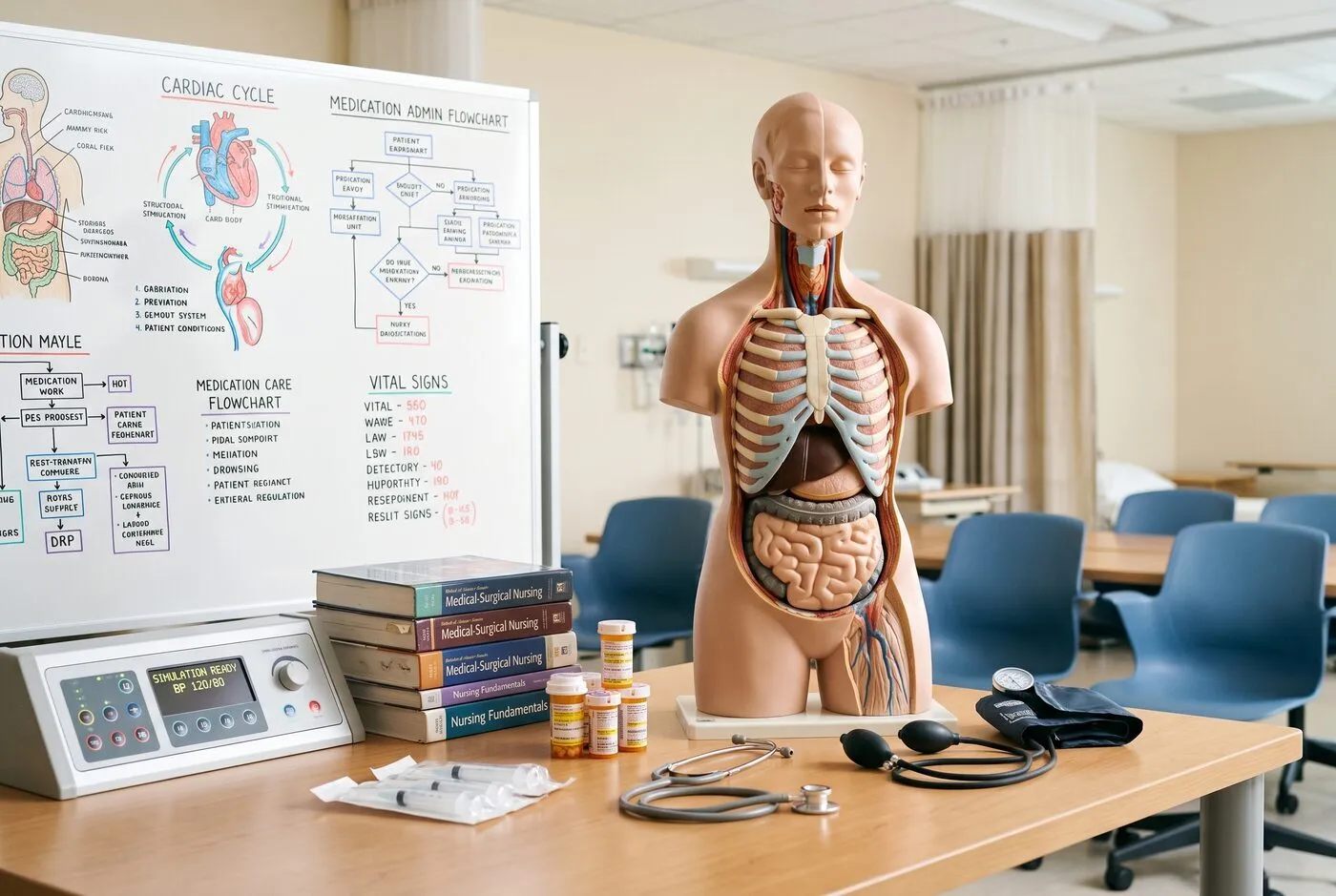
If you are researching how to become a nurse educator, the most important number to internalize up front is not the salary or the growth rate. It is this: you will almost certainly earn less than you do at the bedside. The national BLS median for nurse educators is $80,250. The median for staff RNs is $97,550. That gap is real, and anyone who skips past it in the first paragraph is not being straight with you.
That said, the nurse educator role is genuinely different from bedside nursing in ways that matter to a specific kind of person. The job is growing at 18% through 2032, which is about double the average for all occupations. The path to get there is a master's degree, an active RN license, and a willingness to take the pay cut in exchange for a fundamentally different kind of work week. Whether that trade makes sense for you is what the rest of this page is about.
This guide covers how to become a nurse educator from the ground up: what the job actually looks like day to day, which settings pay the most, the exact credential sequence, and an honest take on who thrives in this career versus who should stay at the bedside.
What a Nurse Educator Actually Does
The title is broad enough to be almost meaningless until you pick a setting. A nurse educator at a hospital might spend most of her week running skills labs, onboarding new grads, and updating policy documentation when a clinical protocol changes. A nurse educator at a community college is planning curricula, grading clinical evaluations, running simulation scenarios, and sitting in department meetings that feel a lot like academic committee work.
What both versions share is a pivot away from direct patient care. You are still making clinical decisions, but now those decisions are about what a new nurse needs to know before her first code, not about the patient in front of you. That is a real psychological shift, and nurses who underestimate it tend to burn out or go back to the floor within two years.
The practical day looks something like this in an academic setting: morning clinical prep or lab setup, a lecture block, one-on-one student conferences, and grading or curriculum work in the afternoon. Hospital-based staff educators run shorter sessions more frequently, but they also carry a larger administrative load as they track competency records and coordinate with unit managers. Neither version is a 9-to-5. Grading clinical paperwork at 10 pm is normal.
Where the nurse educator role diverges clearly from adjacent roles: a nurse administrator career focuses on managing units, budgets, and staff, while a nurse practitioner career keeps you in direct patient care with prescriptive authority. Nurse educators sit between those two worlds and are not quite either one.
Where Nurse Educators Work and How Setting Changes Pay
The two main buckets are academic and practice-based. Academic settings include community colleges, four-year universities, and graduate nursing programs. Practice-based settings include hospital staff development departments, long-term care facilities, and occasionally insurance companies or healthcare technology vendors who need clinical education content.
Pay varies more by setting than almost any other factor. A nurse educator at a research university with a doctoral degree can earn well above the $80,250 median, particularly with tenure. A hospital-based clinical educator in a smaller market can fall close to the $48,800 floor. The full range runs from roughly $48,800 to $129,500, and the spread is not random: geography, institution size, and whether you hold a doctorate explain most of it. The Nurse Educator salary breakdown goes into the specific percentiles by state and setting if you want to model your own market.
Academic positions at four-year universities require a doctorate for anything above adjunct or clinical faculty status. If a tenure-track university position is the goal, plan for the PhD or DNP. If you are targeting a community college program or a hospital staff development role, the MSN is usually sufficient and sometimes all that is accepted for posting eligibility. That distinction matters before you commit to a 4-5 year doctoral program when an 18-month MSN track gets you the same doors.
One underappreciated setting: healthcare vendors, simulation companies, and continuing education firms. These positions pay competitively, often at or above the academic median, with corporate benefits. They do not have the same prestige as a faculty title, but they also do not come with a tenure clock or adjunct poverty wages. Worth a look if you are flexible.
How to Become a Nurse Educator: The Exact Step-by-Step Path
Step one is an RN license, which you already have or are working toward. An active, unencumbered license is required for every nurse educator role across every setting. The clinical experience that license represents also matters practically: most MSN programs require one to two years of bedside experience before admission, and nursing students will ask you clinical questions your textbook does not answer.
Step two is the MSN. This is the minimum credential for most nurse educator positions in academic and practice settings. A nursing education MSN concentration takes 18 to 24 months full-time, or 2.5 to 3 years part-time while working. Cost varies widely: expect $20,000 to $50,000 at a public institution and $40,000 to $80,000 at a private school. Look at the best MSN programs for accreditation status, tuition, and track-specific outcomes before you apply anywhere. CCNE or ACEN accreditation is non-negotiable.
Step three, if you are targeting university faculty, is a doctorate. A DNP takes 2 to 3 additional years post-MSN. A PhD takes 4 to 5 years and is research-focused. For teaching-intensive positions, the DNP is usually sufficient. For research universities, the PhD is the expected credential. Neither is required for hospital-based educator roles or community college positions in most states.
The optional fourth step is the Certified Nurse Educator (CNE) credential from the National League for Nursing. It is not required by law or by most employers, but it signals seriousness in academic nursing circles and shows up as preferred in competitive college postings. If you are already in an academic role and have the clinical hours, sitting for the CNE is a low-cost differentiator. If you are in a hospital educator role and no one in your department mentions it, it is probably not worth the study time right now.
The honest sequencing advice: do not leave the bedside the day you are admitted to an MSN program. Keep clinical hours through your degree if at all possible. Faculty and staff educator positions are competitive, and candidates with recent hands-on experience consistently outperform those who went straight from bedside to classroom without a gap year. If you want help matching a program to your timeline and budget, the find your nursing path quiz narrows the options quickly.
Nurse Educator Salary and Job Outlook
The national BLS median salary for nurse educators is $80,250 per year, with a range from roughly $48,800 at the bottom to around $129,500 at the top. For reference, the median staff RN earns $97,550, so the move to education costs you about $4,700 on median. That number is worth sitting with before you enroll in a master's program.
What actually moves a nurse educator's pay: credentials (doctoral degree adds real money at universities), setting (hospitals and corporations generally pay more than community colleges), geography (California, New York, and Massachusetts have the highest nurse educator wages), and years in role. The tenure system at four-year universities creates pay stability over time, but it also means years of adjunct wages before a permanent position opens. The Nurse Educator salary page breaks down state-level medians and top-paying metros so you can run the numbers for your actual market.
The job outlook is the genuinely good news. Growth of 18% through 2032 is not a rounding error. The driver is straightforward: the nursing shortage creates demand for more nurses, which requires more nurse educators to train them, and the current educator workforce is aging toward retirement. The pipeline problem feeds itself. If you hold an MSN and want an academic or staff development position, you are entering a market that needs you.
One realistic note on salary trajectory: nurse educator compensation does not track the same steep progression as clinical nursing with overtime and differentials. A bedside RN working nights and weekends in a high-demand market can push total compensation well past $100,000. A nurse educator at the same career stage is unlikely to match that without a doctorate and a senior faculty title. The compensation upside exists, but it takes longer to reach.
How to Specialize and Advance as a Nurse Educator
The clearest advancement path in academic settings is the tenure track: clinical faculty, then assistant professor, associate professor, full professor. Each step requires documented scholarship, publications, or grant work alongside teaching. That is a legitimate academic career, and for the right person it is satisfying. For most nurses who did not train as researchers, it is also a grind that takes fifteen years to complete.
The faster advancement tracks are administrative or consultative. A nurse educator who moves into a director of nursing education role at a hospital system is running a department, managing a team, and earning at the high end of the salary range without needing a tenure clock. That path looks more like the nurse administrator career as it develops, and some educators slide between the two roles across their careers.
Specialization by population is another lever. Educators who focus on simulation, informatics, or a specific clinical specialty like critical care or perioperative nursing command more specific expertise and are harder to replace. Simulation technology in nursing education is growing fast, and educators who can design and run high-fidelity simulation programs are genuinely in demand.
If staying patient-adjacent matters to you, it is worth comparing the nurse educator path to the nurse practitioner career. NPs earn more on average, maintain prescriptive authority, and work directly with patients. The trade is that you are still in clinical settings dealing with the physical and emotional weight of direct care. Nurse educators who left bedside nursing for a reason tend to find that trade meaningful. Those who left because they wanted a break from the pace often miss the clinical work more than they expected.
Is the Nurse Educator Career Right for You?
The people who do well in this role share a few traits that are distinct from what makes a great bedside nurse. They get something out of explaining, not just doing. They can sit with a student who is struggling with a concept and feel genuine interest in figuring out how to make it click, not just impatience to get back to the task. They do not need the pace and urgency of a clinical floor to feel engaged. And they are okay with earning less than their bedside peers, at least for a while.
The people who struggle: nurses who went into education because they were burned out on bedside nursing and thought teaching would be easier. It is not easier. It is different. The emotional load of watching students fail, the administrative weight of academic nursing programs, and the frustration of working within institutional bureaucracy are real. Burnout exists here too; it just comes from different sources.
The honest downsides nobody puts in the job description: if you move into academia full-time, you will likely lose some clinical sharpness over time. Adjunct positions are often poorly compensated and offer no benefits. Job searches for full-time faculty positions can take 12 to 18 months because openings at any given institution are rare. The MSN debt load is real, and the salary on the other side does not make it feel trivial, especially if you have existing student loans.
The decision framework: if you have been an RN for at least two years, genuinely enjoy the teaching moments in your clinical work, can tolerate a moderate pay cut, and have a clear target setting (academic versus hospital-based), nurse educator is a career with strong job security and real meaning. If you are running from bedside burnout, fix that first. Changing roles with an unresolved problem just moves the problem.
If you are still deciding between a few career directions, find your nursing path with the guided tool and see where nurse educator stacks up against other options based on your actual priorities.