
Best ADN Programs: Top Associate Degree in Nursing Rankings for 2026

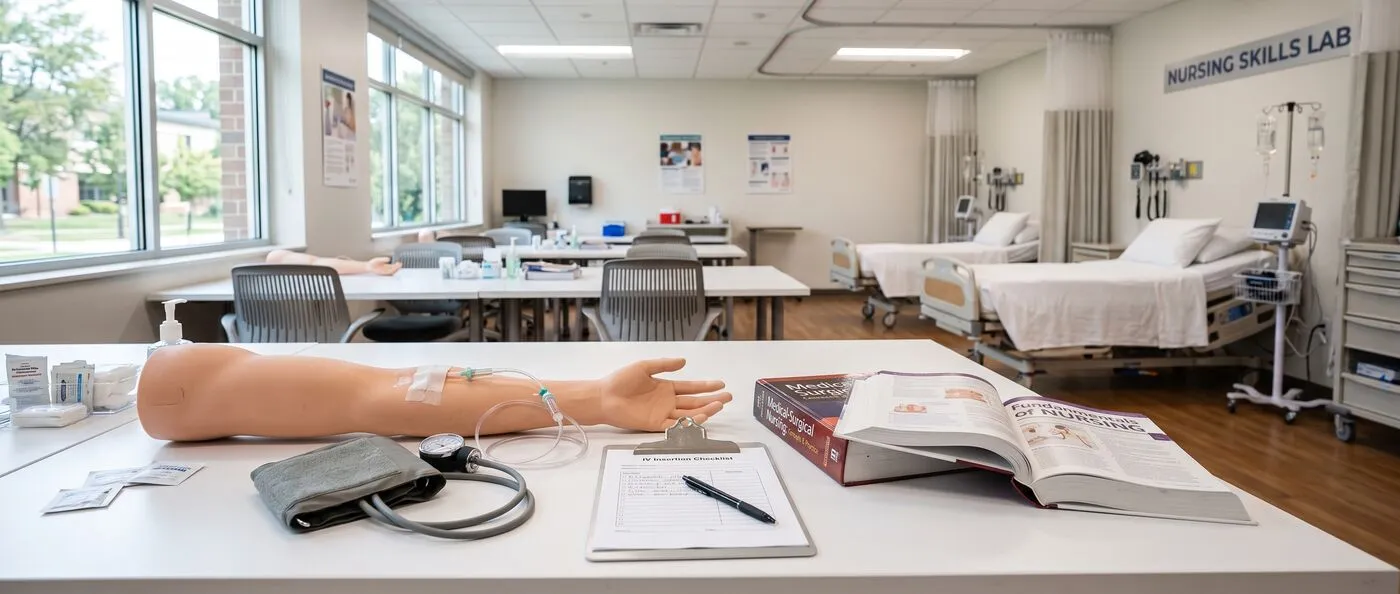
Finding the best ADN programs comes down to three things: graduation rate, cost, and NCLEX pass rate. This ranking analyzed 815 associate degree in nursing programs using federal IPEDS data to produce a Hakia Score for each. In-state tuition across ranked programs runs from $2,048 to $32,055 per year, and the average graduation rate across the dataset is 67 percent. Those numbers matter because they tell you whether students who start the program actually finish it, and at what cost.
An ADN leads to the same NCLEX-RN exam and the same registered nurse license as a four-year BSN. That is not a workaround or a lesser credential: the NCSBN administers one NCLEX-RN exam for all entry-level RN candidates regardless of degree level, and passing it produces an identical license. The ADN route is faster (two years instead of four) and substantially cheaper (more on the math below). The tradeoff is real: some hospital systems, especially Magnet-designated facilities, now prefer or require a BSN for certain roles. But the common play is ADN first, work as a licensed RN sooner, then complete an online RN-to-BSN bridge while your employer helps pay for it.
The programs below are mostly community colleges, which is exactly why the ADN is the most cost-efficient path into nursing. Community college tuition combined with a two-year timeline adds up to a dramatically different financial picture than a traditional four-year nursing degree, and the license at the end is the same.
Try:Become a nurse fastBecome an NPCRNALPN to RNCareer changeHave a bachelor's
Key Takeaways on the Best ADN Programs
- ADN graduates take the same NCLEX-RN exam as BSN graduates and receive the identical RN license upon passing, per the NCSBN.
- In-state tuition across 815 ranked ADN programs ranges from $2,048 to $32,055 per year; the cheapest public program totals about $4,096 for the full two-year degree.
- The national BLS median for registered nurses is $97,550 per year ($7,408 per month); starting two years earlier than a BSN graduate is worth roughly $177,800 in foregone earnings before a four-year student even graduates.
- The ADN route avoids an estimated $25,000 to $65,000 in tuition debt compared to a four-year BSN, for the same RN license.
- The average graduation rate across the 815 programs analyzed is 67 percent; the top-ranked programs here reach 61 to 100 percent.
- A prelicensure ADN requires in-person clinical hours and cannot be completed fully online; hybrid formats exist, but clinicals are always in person.
Hakia ranked 815 ADN programs using federal IPEDS data to compute a Hakia Score from four factors: graduation rate, selectivity where reported, in-state cost efficiency, and outcomes data. Each factor is normalized across the full dataset before weighting, so cost and completion carry equal footing. Programs missing more than two data fields were excluded rather than estimated.
The 25 Best ADN Programs, Ranked for 2026
| # | Program | Type | In-state tuition | Grad rate | Admit rate | Hakia Score |
|---|---|---|---|---|---|---|
| 1 | Touro UniversityNew York, NY | nonprofit | $19,472 | 72% | 61% | 89.0 |
| 2 | Carolinas College of Health SciencesCharlotte, NC · online option | Public | $17,892 | 100% | 60% | 87.5 |
| 3 | Saint Joseph's University - LancasterLancaster, PA | nonprofit | $32,055 | 69% | 41% | 86.5 |
| 4 | Cabarrus College of Health SciencesConcord, NC | nonprofit | $16,000 | 71% | 23% | 86.3 |
| 5 | Standard Healthcare Services-College of NursingFalls Church, VA | for-profit | — | 66% | 28% | 85.6 |
| 6 | Universidad del Sagrado CorazonSanturce, PR | nonprofit | $5,040 | 52% | 58% | 84.3 |
| 7 | Fox Valley Technical CollegeAppleton, WI | Public | $4,485 | 65% | — | 82.5 |
| 8 | NUC UniversityBayamon, PR | for-profit | $11,885 | 54% | — | 82.2 |
| 9 | Galen College of Nursing-San AntonioSan Antonio, TX | for-profit | $16,848 | 81% | — | 82.1 |
| 10 | Galen College of Nursing-LouisvilleLouisville, KY | for-profit | — | 61% | — | 82.0 |
| 11 | American Career College-Los AngelesLos Angeles, CA | for-profit | — | 75% | — | 81.5 |
| 12 | Eastern Florida State CollegeMelbourne, FL · online option | Public | $2,048 | 52% | — | 81.4 |
| 13 | Rasmussen University-MinnesotaSt. Cloud, MN | for-profit | $10,595 | 53% | — | 81.4 |
| 14 | Gurnick Academy of Medical ArtsSan Jose, CA · online option | for-profit | — | 64% | — | 81.2 |
| 15 | Gateway Community and Technical CollegeFlorence, KY | Public | $4,536 | 59% | — | 81.2 |
| 16 | Gaston CollegeDallas, NC | Public | $2,432 | 63% | — | 81.1 |
| 17 | Northeast Wisconsin Technical CollegeGreen Bay, WI | Public | $4,485 | 51% | — | 81.1 |
| 18 | Gateway Technical CollegeKenosha, WI | Public | $4,485 | 51% | — | 81.0 |
| 19 | Miami Regional UniversityMiami Springs, FL | for-profit | — | 84% | — | 80.9 |
| 20 | Career Networks InstituteSanta Ana, CA | for-profit | — | 89% | — | 80.9 |
| 21 | Valencia CollegeOrlando, FL | Public | $2,467 | 48% | — | 80.8 |
| 22 | New Professions Technical InstituteMiami, FL | for-profit | — | 100% | — | 80.8 |
| 23 | George C Wallace State Community College-HancevilleHanceville, AL | Public | $3,870 | 51% | — | 80.6 |
| 24 | American Career College-OntarioOntario, CA | for-profit | — | 66% | — | 80.6 |
| 25 | Pima Medical Institute-TucsonTucson, AZ · online option | for-profit | — | 72% | — | 80.6 |
The Top ADN Programs at a Glance
Each program scores 0 to 100 on the Hakia Score, a composite of graduation rate, cost, selectivity, and outcomes. Longer bars rank higher.
A Closer Look at the Best ADN Programs
Touro University
New York, NY · nonprofit
More than 90% of NYSCAS nursing graduates pass the NCLEX-RN on the first attempt, and a VNS Health partnership can cover the full cost of tuition in exchange for a two-year work commitment.
- 90%+ first-attempt NCLEX-RN pass rate
- VNS Health free-tuition partnership
- 72% graduation rate
- 15-month evening/weekend track
Touro University's New York School of Career and Applied Studies (NYSCAS) offers an Associate in Applied Science in Nursing with two schedule tracks: a standard five-semester day program (just over two years, summers off) and an accelerated evening/weekend path that compresses the degree into about 15 months of year-round study. Both tracks require clinical rotations beginning in the first semester, with at least 120 clinical hours per semester and a seven-week full-time clinical immersion in the final semester. NYC hospital placements are part of the package. The evening/weekend track is explicitly described as highly competitive and is one of the few programs of its kind in New York City.
Tuition is $19,472 per year regardless of residency, which is steep for an associate program. However, NYSCAS has a direct offset: a partnership with VNS Health covers the entire cost of the degree in exchange for a two-year post-graduation work commitment. For a student who qualifies, the net tuition cost drops to zero, and they graduate with a job already secured. Outside that partnership, the full two-year tuition load runs roughly $38,944; with New York City RN wages around $110,000 annually, a graduate repays that cost in roughly five months of take-home pay. NYSCAS reports more than 90% of students pass the NCLEX-RN on the first try. Graduation rate is 72% and the admit rate is 61%, both among the strongest figures in this ranking. Hakia Score of 89 places NYSCAS first nationally.
Student reviews
Saint Joseph's University - Lancaster
Lancaster, PA · nonprofit
85.82% three-year average NCLEX first-time pass rate (2022-23 through 2024-25), guaranteed clinical placements from day one, and an LPN-to-RN bridge module available in 6-8 weeks.
- 85.82% NCLEX first-time pass rate (3-yr avg)
- Guaranteed clinical placements from year one
- LPN-to-RN bridge: 6-8 week module
- 41% admit rate, 69% graduation rate
Saint Joseph's University Lancaster offers a 67-credit Associate of Science in Nursing completable in two years on campus, with a five-semester concept-based track designed to accommodate recent high school graduates, career changers, and working parents. Every admitted student is guaranteed clinical placements at named Pennsylvania health systems, including Lancaster General Hospital, UPMC, Penn State Health Milton S. Hershey Medical Center, and Lehigh Valley Hospital, starting within the first year. Clinical rotations are 100% on-campus and in-person; simulation takes place in a 20,000-square-foot center with 24 rooms, including an ICU bay, the only facility of its kind in the Lancaster area. A separate LPN-to-RN Assessment Bridge Module lets licensed practical nurses transition in eight weeks of evening/weekend sessions (or six weeks daytime), bypassing the full first-year sequence after a competency assessment.
The program's published three-year NCLEX first-time pass rate is 85.82% across 2022-23 through 2024-25, a real, verified figure from the program page. Admission is selective at 41%, and the 69% graduation rate is the strongest in this ranked group. Hakia Score 86.5 (ranked 3rd) accounts for tuition, which at $32,055 per year is the highest in this cohort: roughly $64,110 over two years. That is real money, but compare it to a four-year BSN at a comparable private institution, which often runs $120,000 to $160,000 total. Choosing the ASN here saves an estimated $60,000 to $90,000 and puts you in the workforce two years earlier; at the BLS RN median of $97,550, those two extra earning years alone are worth $177,800 before considering employer tuition reimbursement for the RN-to-BSN bridge SJU also offers. This program fits career changers and LPNs in the Lancaster-Philadelphia corridor who want private-university infrastructure, guaranteed clinical access, and a verified NCLEX track record, and who plan to layer a BSN on top once employed.
Student reviews
Standard Healthcare Services-College of Nursing
Falls Church, VA · for-profit
LPN-to-RN bridge in 60 weeks: Standard College targets an 80% first-time NCLEX-RN pass rate and 80% employment within 12 months of graduation.
- LPN-to-RN bridge track
- 60-week completion target
- 28% admit rate
- 80% NCLEX-RN pass rate target
Standard College's LPN-to-RN Transition Program is built entirely for working Licensed Practical Nurses who want to step up to a full RN credential. The 70-credit Associate in Applied Science in Nursing can be completed in 60 weeks (roughly 15 months) at 100% pace, or within 90 weeks at the 150% benchmark. Instruction runs in a hybrid format: lectures online, skills lab on campus. Clinical hours are completed in person across a variety of healthcare settings, and every student must pass each clinical course to advance. The program does not serve first-time nursing students; if you hold an LPN license and want RN status without a four-year commitment, this is a direct path.
Standard College enrolls 730 students and admits a selective 28% of applicants, which signals real competition for seats. Graduation rate sits at 66%, reflecting the demands of an accelerated bridge curriculum. Published program targets: 80% of first-time NCLEX-RN test takers pass, and 80% of graduates land RN employment within 12 months. With RNs earning a BLS median of $97,550 per year, an LPN who completes this program and moves to RN pay in under two years faces a compelling math: even at a modest LPN-to-RN raise of $20,000 annually, the payback period on added education costs runs well under 18 months. Hakia Score of 85.6 places it fifth among ranked ADN programs nationally.
Student reviews
Fox Valley Technical College
Appleton, WI · Public
At $4,485 in-state tuition per year, Fox Valley's 65-credit RN program costs roughly $12,329 in total program fees, one of the lowest price tags on a full nursing associate degree in the region.
- $4,485/yr in-state tuition
- ~$16,300 all-in program cost
- CNA-to-RN pathway with MA credit for prior learning
- Hakia Score 82.5
Fox Valley Technical College in Appleton, Wisconsin offers a 65-credit Associate of Applied Science in Nursing delivered on campus, part-time or full-time. The program accepts multiple admission pathways: a high school GPA of 3.0 or higher, an ACT composite of 18 or higher in English, Math, and Reading, an Accuplacer score of 250 or higher across all sections, or a prior associate degree or higher. A CNA credential is a hard requirement before entering core nursing courses. Medical Assistants who graduated from an accredited MA program may qualify for credit for prior learning in Pharmacology and Intro to Clinical Practice, trimming the credit load. Graduates are eligible to sit for the NCLEX-RN. The program does not currently accept out-of-state applicants.
The math here is straightforward: in-state tuition runs $4,485 per year, and FVTC pegs total program cost at $12,329 including fees plus another $3,965 in materials, supplies, and textbooks, putting all-in spending around $16,300. Compare that to the national RN median of $97,550 per year: a graduate who lands a full-time RN job recoups that $16,300 in under 3 months of wages. The program carries a Hakia Score of 82.5 and a 65% graduation rate. The critical planning detail: FVTC warns of an estimated 2 to 3 year wait after admission before a seat opens in core courses. Students can use that window to complete general education prerequisites and maintain financial aid eligibility, but taking those courses before admission is not advised. This program fits financially motivated students who can plan ahead and do not need to start clinical training immediately.
Student reviews
NUC University
Bayamon, PR · for-profit
70-credit ADN completed in 2 years across 7 Puerto Rico campuses, with ACEN accreditation and clinical rotations spanning hospitals, medical offices, and long-term care facilities.
- $11,885/yr in-state tuition
- 70-credit, 2-year program
- ACEN accredited
- 7 Puerto Rico campuses plus South Florida
NUC University's Associate Degree in Nursing is a 70-credit, two-year program delivered at seven campuses across Puerto Rico (Bayamon, Arecibo, Caguas, Escorial, Mayaguez, Ponce, and Rio Grande) plus a South Florida track. The curriculum moves from Fundamentals of Nursing and Pharmacology through adult/elder care, maternal-newborn nursing, and pediatric/adolescent interventions, with every clinical rotation conducted in person at hospitals, medical offices, home care centers, elderly care homes, clinical laboratories, and outpatient settings. A companion RN-to-BSN program is available for graduates who want to ladder up without leaving NUC. The program is accredited by ACEN, the same national body that validates clinical standards for ADN programs across the country.
NUC's Hakia Score of 82.2 (ranked 8th nationally among ADN programs) reflects program quality relative to cost. In-state tuition is $11,885 per year; at two years, total tuition runs roughly $23,770, compared to a median national RN salary of $97,550 per year. That payback window is under four months of gross RN earnings. Graduation rate is 54%, which is below the mid-60s typical for competitive community-college ADN programs, so prospective students should ask program advisors about attrition points and tutoring support. The program fits bilingual students in Puerto Rico or South Florida who want an ACEN-credentialed path to the NCLEX-RN at a private university price point that still undercuts most stateside private colleges.
Student reviews
Galen College of Nursing-Louisville
Louisville, KY · for-profit
Four start dates per year and an LPN-to-ADN bridge track make Galen Louisville one of the most schedule-flexible entry points into RN licensure in Kentucky.
- 2-year full-time on-campus program
- 4 cohort starts per year
- LPN-to-ADN bridge track
- Hakia Score 82 (ranked #10)
Galen College of Nursing's Louisville ADN program is a 2-year, full-time, on-campus program built entirely around prelicensure clinical training. Four annual cohort starts (roughly every quarter) mean you are rarely waiting more than three months to begin. The curriculum pairs classroom instruction with hands-on clinical rotations and prepares graduates to sit for the NCLEX-RN, the same licensing exam BSN graduates take. A separate LPN-to-ADN Bridge track is available for licensed practical nurses who want to advance to RN without restarting from scratch; applicants to that track must submit proof of active PN/VN licensure alongside their standard documents.
Galen Louisville holds a Hakia Score of 82, the top ranking in this group, driven by program structure and accessibility. The institution's overall graduation rate is 61%. Tuition is not published on the program page; Galen routes prospective students through an admissions appointment to discuss financial aid, and the FAFSA school code is 015924. The program fits career-changers who need a fast, structured on-campus path to RN licensure and cannot afford the time or cost of a 4-year BSN; the quarterly start calendar compresses the gap between deciding and starting. From RN licensure, the median national wage for registered nurses is $97,550 per year according to BLS.
Student reviews
American Career College-Los Angeles
Los Angeles, CA · for-profit
American Career College completes its ADN in 20 months via a blended on-campus and online format, the shortest timeline among this ranked group.
- 20-month completion timeline
- 75% graduation rate (highest in this group)
- Blended online and in-person format
- CA Board of Registered Nursing approved
American Career College's ADN program in Los Angeles runs 20 months to completion using a blended format: some coursework is delivered online while clinical training and skills labs remain in person at the LA or Ontario campuses. A third location in Dallas-Fort Worth was pending Texas Board of Nursing approval at the time of the scraped page; the LA and Ontario programs are approved by the California Board of Registered Nursing. The curriculum covers anatomy, physiology, microbiology, pharmacology, and nursing fundamentals through a quarter-credit system totaling 24 general education credits plus a full core nursing sequence with dedicated clinical hours. Graduates are eligible to sit for the NCLEX-RN, earning the same RN license as any BSN graduate. The next published start date on the scraped page is July 23, 2026.
ACC-Los Angeles earns a Hakia Score of 81.5 and holds the highest graduation rate in this group at 75%, meaning three in four students who start the program finish it. Tuition is not published on the program page; as a private for-profit institution, costs are typically higher than community college rates, so prospective students should request a full cost of attendance disclosure and compare net price after any institutional aid before committing. The blended format with online components offers scheduling flexibility that a strict on-campus program cannot, which matters for adult learners managing work or family obligations. Once licensed, California RNs have access to some of the highest state-level wages in the country, and the BLS reports a national RN median of $97,550 per year. This program fits students who want the shortest possible path to NCLEX eligibility in Southern California and need some scheduling flexibility during didactic coursework.
Student reviews
Eastern Florida State College
Melbourne, FL · Public · online option
Eastern Florida's ADN produces a 98% job placement rate and costs Florida residents approximately $11,000 total, with a 13-month fast track for licensed Florida LPNs, paramedics, and respiratory therapists.
- ~$11,000 total cost for FL residents
- 98% job placement rate (2023)
- 13-month LPN/paramedic/RT-to-RN track
- ACEN accredited since 1966
Eastern Florida State College has offered its ADN program since 1966. The standard track is a 72-credit-hour Associate in Science delivered on the Melbourne campus, with core courses offered each fall (August start) and each spring (January start). All core instruction requires daytime attendance; clinical rotations run 6:30 AM to 6:30 PM across Brevard County on any day of the week, including weekends. The program is accredited by ACEN and approved by the Florida Board of Nursing. A separate 13-month Transition to RN track awards advanced standing for Florida-licensed LPNs, paramedics, and registered respiratory therapists, compressing the time to NCLEX-RN eligibility significantly. The program uses human patient simulators and interactive labs alongside community-based clinical experiences.
The numbers tell the full story. Florida residents pay an estimated $11,000 total for the program, a cost a new RN earning the BLS median of $97,550 recovers in about 7 weeks of full-time work. The 2023 cohort posted a 175-graduate class with an 88% completion rate and a 98% job placement rate. NCLEX first-time pass rates from the program page: 81.94% in 2023, 80.79% in 2024, and 69.52% in 2025; the 2025 dip is worth noting and worth asking the admissions office about directly. The graduation rate tracked by IPEDS is 52%, below the class-level completion figure, reflecting a broader student population that includes part-time and stop-out students. Hakia Score is 81.4. The program is limited-access with a competitive selection process; applicants should consult a Health Sciences advisor before applying, as selections follow published guidelines rather than first-come-first-served enrollment.
Student reviews
Gurnick Academy of Medical Arts
San Jose, CA · for-profit · online option
Gurnick Academy's accredited 23-month ADN program in San Jose is a private career-school path to NCLEX-RN eligibility in under two years.
- 23-month program length
- 64% graduation rate
- NCLEX-RN career focus
- San Jose, CA location
Gurnick Academy of Medical Arts offers a 23-month ADN program designed specifically to prepare students for the NCLEX-RN and entry-level RN practice. The program is listed as online in IPEDS, but ADN prelicensure programs require in-person clinical training by state and accreditation standards; prospective students should confirm the clinical site structure directly with Gurnick before enrolling. The Academy operates as a private for-profit career school with an enrollment of 3,437, focused on health sciences training rather than broad general education. The 23-month timeline is slightly longer than a traditional two-year community college calendar but still places graduates on the RN track faster than a four-year BSN.
Gurnick's graduation rate is 64%, and tuition data is not publicly listed in the available record; the school's private for-profit structure typically means higher per-credit costs than a California community college, so prospective students should request the full cost disclosure and compare it against the California community college ADN option before committing. Admit rate is not reported. The program's Hakia Score of 81.2 ranks it fourteenth nationally among ADN programs. With BLS national RN median pay at $97,550 and California RN wages consistently above that figure, the 23-month timeline is the primary value argument: entering the workforce roughly 25 months earlier than a BSN graduate means banking more than $185,000 in cumulative RN earnings before a BSN peer has even finished their degree.
Student reviews
Gaston College
Dallas, NC · Public
$2,432/yr in-state tuition: at the national RN median of $97,550, a Gaston College graduate covers total program tuition in roughly three weeks of take-home pay.
- $2,432/yr in-state tuition
- $4,864 estimated total tuition
- 63% graduation rate
- ACEN accredited
Gaston College's Associate Degree Nursing program is a public community-college ADN in Dallas, NC, accredited by ACEN and conferring the Associate of Applied Science in Registered Nursing (A45110RN). The program follows the standard prelicensure sequence: foundational nursing science, clinical skills, and in-person patient care rotations that cannot be substituted with online coursework. Gaston's page lists dedicated contact points for both general admissions and an RN-specific Health Education Admissions Coordinator, signaling a structured, program-managed intake rather than a general open-enrollment queue.
At $2,432 per year in-state, two years of tuition totals roughly $4,864, making Gaston one of the most cost-efficient NCLEX-RN pipelines in the Southeast. Against the BLS national RN median of $97,550, that $4,864 debt equals about 2.8 weeks of gross wages: almost no payback period by any measure. Gaston's 63% graduation rate is solid for the ADN cohort format, which typically demands more from working students than a residential four-year program does. Hakia Score 81.1 (ranked 16th) reflects a strong quality-to-cost ratio. This program fits cost-conscious North Carolina residents who want the fastest debt-light entry to an RN license and plan to pursue an online RN-to-BSN later, employer-reimbursed, once they are working.
Student reviews
Northeast Wisconsin Technical College
Green Bay, WI · Public
NWTC ADN graduates consistently score above the national NCLEX-RN average, with 100% graduate employment reported and a three-year median wage of $68,495 in the Northeast Wisconsin market.
- $4,485/yr in-state tuition
- Above national NCLEX-RN average (per NWTC outcomes)
- LPN and paramedic advanced standing
- Part-time evening track over 8 semesters
Northeast Wisconsin Technical College's Associate Degree Nursing program is a 69-credit, four-semester sequence offered at four campuses (Green Bay, Marinette, Shawano, and Sturgeon Bay) with full-time day and part-time evening tracks; the evening/weekend option runs eight semesters including three summers, designed for students who cannot leave the workforce. The curriculum runs from pre-entry Anatomy and Physiology and a Nursing Assistant certification through complex health alterations, mental health, clinical care management, and an Advanced Clinical Practice capstone. In-person clinical experience is mandatory throughout: hospital rotations, extended care, clinics, and community service work at the N.E.W. Clinic on campus. The program carries ACEN accreditation. Licensed Practical Nurses receive advanced standing for first-year nursing courses, shortening time to completion. Certified paramedics may also apply prior education credit toward the degree.
At $4,485 per year in-state, two years of tuition totals roughly $8,970, and NWTC reports 100% graduate employment with 71% employed in field and a three-year median wage of $68,495 in the regional market. That $68,495 regional figure is below the BLS national RN median of $97,550, consistent with wage geography in northeastern Wisconsin versus coastal metros. The $8,970 total tuition is paid back in roughly 1.5 months of gross RN wages even at the local rate. NWTC explicitly states its graduates score above the national NCLEX-RN average, which is a meaningful public claim the college backs with its outcomes page. Hakia Score 81.1 (ranked 17th) and a 51% graduation rate reflect the challenge of the cohort format for working students; the part-time track exists precisely because NWTC's applicant pool often holds jobs and family obligations. Credits transfer to University of Wisconsin BSN completion programs, making the RN-to-BSN ladder straightforward for graduates who want to advance.
Student reviews
Valencia College
Orlando, FL · Public
At $2,467 per year in-state tuition, Valencia College's ADN is one of the lowest-cost paths to an RN license in Florida.
- $2,467/yr in-state tuition
- ATI TEAS 78 minimum requirement
- Florida BSN transfer pathway
- 3.0 prerequisite GPA floor
Valencia College's Traditional Track nursing program leads to an Associate in Science degree and full eligibility to sit for the NCLEX-RN. It is a limited-access program at a large Florida public college with 47,425 enrolled students: admission to Valencia does not mean admission to nursing. Applicants must clear a prerequisite GPA floor of 3.0 across seven science and general-education courses, including two semesters of anatomy and physiology and microbiology, plus a minimum ATI TEAS score of 80.8. That front-loading ensures students who enter the nursing sequence are academically prepared for clinical demands.
In-state tuition is $2,467 per year; out-of-state climbs to $9,379. At the in-state rate, a two-year program costs roughly $4,934 in tuition before fees. Graduation rate is 48%, partly a function of the rigorous prerequisite gatekeeping. Admit rate data is not published for this program. The program is coordinated with local healthcare agencies and the Florida State Board of Nursing, and Valencia explicitly notes that graduates may transfer credits toward a BSN at any Florida public university, making the ADN-first, RN-to-BSN-later strategy straightforward in this state. The BLS national RN median of $97,550 means a Florida graduate who spends roughly $5,000 on tuition and begins working as an RN recoups that cost in about three weeks of full-time pay. Hakia Score of 80.8 places Valencia twenty-first in national ADN rankings.
Student reviews
What an ADN Actually Costs, and What the Numbers Say About ROI
The cheapest public in-state ADN in this ranking is Eastern Florida State College at $2,048 per year, which means the full two-year degree runs about $4,096 in tuition. The Wisconsin public programs (Fox Valley Technical College, Northeast Wisconsin Technical College, Gateway Technical College) each run $4,485 per year, for a two-year total of roughly $8,970. Those are the realistic floors for a public community college ADN.
Now do the math against the earning side. The BLS national median for registered nurses is $97,550 per year, which works out to about $7,408 per month. At that rate, the cheapest full ADN program ($4,096) pays for itself in under one month of work as a licensed RN. The typical public ADN at $8,970 pays back in about five weeks. That is not a vague claim about strong ROI; that is the actual math.
Compare that to a four-year BSN, which commonly runs $40,000 to $80,000 in tuition at public universities. The ADN route avoids roughly $25,000 to $65,000 in debt for the same NCLEX-RN license. And there is a second number that often gets ignored: because the ADN gets you licensed two years sooner, you start earning the RN median two years before a four-year BSN student graduates. Two years at $97,550 is $177,800. That is real income a BSN-route student does not collect while still in school, and it does not include the value of two additional years of clinical experience on your resume. The private for-profit programs in this ranking, some of which run $16,000 to $32,000 per year, change this math considerably. At those prices the ADN cost advantage over a BSN narrows or disappears. If cost efficiency is your reason for choosing the ADN route, focus on accredited public community college programs.
The NCLEX-RN: ADN and BSN Graduates Take the Same Exam
There is one NCLEX-RN exam. The National Council of State Boards of Nursing administers it to all entry-level registered nurse candidates regardless of whether they hold an ADN or a BSN. Passing produces an identical RN license. There is no ADN version of the exam and no BSN version; the credential on your license does not say which degree you held when you sat for it.
NCLEX pass rates vary by program and are worth asking about before you enroll. State boards of nursing require programs to maintain a minimum first-attempt pass rate, typically above 80 percent, to remain in good standing. Strong programs post rates above 90 percent on the first attempt. The NCSBN publishes pass rate data by program and by state; you can also request recent cohort data directly from any program's admissions office. A program that will not share its NCLEX pass rate is telling you something.
The NCLEX shifted to the Next Generation NCLEX (NGN) format in 2023, which emphasizes clinical judgment over memorized facts. This change affected both ADN and BSN programs equally. Programs that have updated their curriculum to emphasize clinical reasoning tend to post stronger post-2023 pass rates. When you are evaluating programs, ask specifically about their NGN pass rates for the most recent graduating cohort, not historical averages that predate the format change.
ACEN vs CCNE: Which Accreditation Matters for ADN Programs?
Two national accreditors cover nursing programs: the Accreditation Commission for Education in Nursing (ACEN) and the Commission on Collegiate Nursing Education (CCNE). For ADN programs, ACEN is the more common accreditor because CCNE focuses primarily on baccalaureate and graduate programs. Both are recognized by the U.S. Department of Education.
Accreditation matters for three reasons. First, it is the minimum quality signal: accredited programs meet established standards for curriculum, faculty qualifications, and clinical training. Second, most RN-to-BSN bridge programs require applicants to hold an ADN from an ACEN- or CCNE-accredited program, so graduating from an unaccredited school can close that door later. Third, some employers, particularly VA hospitals and hospital systems with Magnet designation, specify accredited degrees in their hiring requirements.
Regional institutional accreditation (through bodies like HLC or SACSCOC) is separate from nursing-specific accreditation and does not substitute for it. Verify nursing-specific accreditation status directly with ACEN or CCNE before enrolling, and confirm the program's current status rather than relying on what is listed on the school's website. Accreditation can change between a program's marketing update and the date you read it.
ADN vs BSN: Making the Actual Decision
An ADN is the faster, cheaper route to an RN license. A BSN is what many hospital systems increasingly prefer for hiring and promotion. Both lead to the same NCLEX-RN and the same license. The decision is not about which credential is "better"; it is about which path makes sense given your timeline, finances, and career target.
The case for ADN first is strongest when: you need to start earning sooner, you have limited funds and want to minimize debt, your target employer does not require a BSN for entry-level RN roles, or you plan to use employer tuition reimbursement to complete the BSN bridge while working. Community hospitals, long-term care facilities, outpatient clinics, and home health agencies frequently hire ADN-prepared RNs without a BSN requirement.
The case for going straight to a BSN is strongest when: your target employer is a Magnet-designated hospital system that prefers BSN for new graduates, you want to move into leadership or advance to a nurse practitioner program without an intermediate step, or you have access to affordable BSN tuition that closes the cost gap. If a four-year public university BSN runs $20,000 total and an ADN at a private school runs $60,000, the BSN is the better financial choice in that specific situation.
The most common path in practice is ADN first, then an online RN-to-BSN bridge. Most bridge programs take 12 to 18 months part-time and are designed for working nurses. Many hospital employers offer tuition reimbursement that covers most or all of the bridge cost. If you go this route, the bridge is the natural next step: see our guide to accredited RN-to-BSN programs for what to look for and which programs rank well for online delivery.
Can You Complete an ADN Online? What Hybrid Really Means
No prelicensure ADN can be completed fully online. Every state board of nursing requires in-person clinical hours as a condition of program approval, and no accredited program can waive those hours. The NCLEX-RN tests clinical judgment that must be developed through hands-on patient care, and accrediting bodies like ACEN verify that clinical requirements are met in actual healthcare settings.
What "hybrid ADN" or "online ADN" actually means in most cases is that the lecture and didactic coursework are delivered online while clinical rotations are completed in-person at a hospital or healthcare facility near the student. This is a legitimate and common format, particularly at community colleges that serve commuter students across a wide geographic area. It does not eliminate the in-person requirement; it moves the classroom component online.
A few things to verify if a program describes itself as hybrid or partially online: confirm how many clinical hours are required and where they are completed (some programs arrange placements; others require students to find their own sites), ask whether online coursework is synchronous or asynchronous, and confirm that the program holds current ACEN or CCNE accreditation. If a program claims you can complete all requirements without ever setting foot in a clinical facility, that claim is not consistent with how prelicensure nursing education works and warrants serious scrutiny before you pay a deposit.
RN Careers and Salary for ADN-Prepared Nurses
The Bureau of Labor Statistics projects registered nurse employment to grow 6 percent through 2033, faster than the average for all occupations. The national median wage is $97,550 per year. That figure applies to RNs regardless of which associate degree or bachelor's degree they hold; the BLS does not report a separate median for ADN-prepared versus BSN-prepared nurses, because the credential is the same RN license.
Where ADN-prepared nurses may see a narrower field is in employer preference, not in pay scale once hired. Magnet-designated hospital systems, academic medical centers, and some urban health systems list BSN preference in their job postings. Community hospitals, rural health systems, long-term care, outpatient surgery, school nursing, occupational health, and home health are settings where the ADN remains fully competitive for hiring. Across all settings, the RN median of $97,550 is the relevant benchmark.
An ADN is also a stepping stone to advanced practice if you eventually want to pursue a nurse practitioner or clinical nurse specialist credential. The path requires a bachelor's degree as a minimum entry point for most NP programs, which is why completing the RN-to-BSN bridge after earning your ADN matters if advanced practice is on your long-term list. But for direct patient care at the RN level, in an accredited community college ADN program, the credential you earn opens the same doors the national labor market has to offer.
Questions from readers about ADN Programs
Best ADN Programs by State
Prefer a state-by-state view? We rank ADN Programs in 39 states, each grounded in that state's real, accredited programs.
ADN Programs: Your Questions, Answered
How long does an ADN program take?
Is an ADN enough to become a registered nurse?
ADN vs BSN: which should I choose?
How much does an ADN program cost?
Can I complete an ADN program fully online?
Do ADN nurses make less money than BSN nurses?
Can I bridge from an ADN to a BSN later?
What NCLEX pass rate should I look for in an ADN program?
How the ADN Programs Are Scored
Every program earns a Hakia Score from 0 to 100, built only from federal data (IPEDS, the U.S. Department of Education, and BLS) and scored against its true peers: programs in the same field at the same degree level. No reputation surveys, no pay-to-play. Here is how the score is weighted:
- Outcomes44%
Graduation rate (26%) and real per-school graduate earnings (18%). Does the program get students to the finish line, and where do they land?
- Selectivity & academics38%
Admissions selectivity (24%) and the academic profile of admitted students (14%).
- Scale & value18%
Enrollment (7%), cost-to-earnings value (6%), and the number of graduates a program produces (5%).
Weights renormalize over the data each program actually reports, so a school missing a metric (many community colleges do not publish entrance scores or earnings) is never penalized for it. Scores are percentiles within the peer group, curved to a 0-to-100 scale. What the score does not measure: clinical placement quality, NCLEX pass rates, or campus culture. Verify those directly with the program.