
Best Accelerated BSN Programs in the U.S. (2026 Rankings)

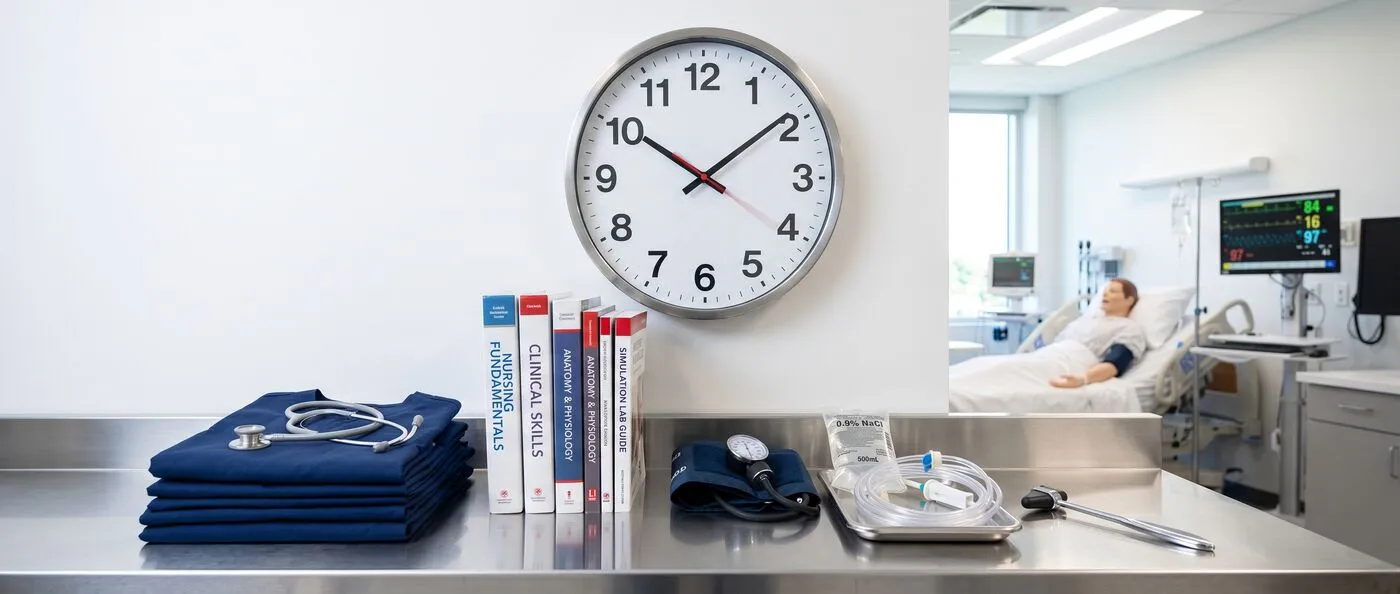
The best accelerated bsn programs in the U.S. share one defining feature: they are built for people who already have a bachelor's degree and want to become a registered nurse without spending four more years in school. If that describes you, an accelerated BSN is a prelicensure program, meaning you enter without an RN license, complete the nursing curriculum in roughly 12 to 18 months of full-time study, and then sit for the NCLEX-RN for the first time to earn your license. It's a second-degree path, not a graduate degree, and the intensity level is real.
Hakia analyzed 24 accelerated BSN programs nationwide, scoring each on cost, graduation outcomes, selectivity, and program data from IPEDS. Tuition across these programs ranges from $5,407 at the University of Louisiana at Lafayette to $66,325 at Duke University, a spread that makes choosing the right program a genuinely consequential financial decision. The programs at the top of this list earned their positions by combining strong outcomes with reasonable cost and demonstrated academic rigor, not just brand recognition.
This guide walks through everything you need to make a clear decision: who an accelerated BSN is built for, what prerequisites you need before you can apply, what the 12-to-18-month experience actually demands, what it costs versus what you'll earn, and how to evaluate accreditation and program fit. If you're a career-changer ready to move fast and do the work, read the full guide before you apply anywhere.
Key Takeaways on the Best Accelerated BSN Programs
- An accelerated BSN typically runs 12 to 18 months of full-time, intensive coursework and clinical rotations. Some programs compress to 11 months; none treat enrollment as a part-time activity.
- Tuition across the 24 programs Hakia analyzed ranges from $5,407 (University of Louisiana at Lafayette, in-state) to $66,325 (Duke University), a difference that adds up to roughly $60,000 in debt before fees and living costs.
- Entry requires a prior bachelor's degree in any field plus science prerequisites that typically include anatomy, physiology, microbiology, chemistry, and statistics. Missing even one of those prerequisites means delaying your start date by a semester or more.
- Graduates sit for the NCLEX-RN for the first time after completing the program. The national first-time pass rate for U.S.-educated candidates has historically run 85 to 90 percent; programs are required by accreditors to track and report this figure.
- The national median annual wage for registered nurses is $97,550 according to the BLS, making the math on a one-year intense program straightforward compared to spending two or three additional years in a traditional four-year track.
- Most accelerated BSN cohorts admit students two to four times per year. Start date flexibility matters if you're still finishing prerequisites or need to give notice at your current job.
Hakia scored 24 accelerated BSN programs on a 100-point Hakia Score using data pulled from IPEDS and verified against each school's nursing department pages. The four scoring factors are cost (tuition and fees, weighted most heavily), student outcomes (graduation rate and NCLEX passage data where available), selectivity (admission rate as a proxy for cohort rigor), and program availability (start date frequency and format). Programs with suspended or unverifiable ABSN delivery were excluded.
The 20 Best Accelerated BSN Programs, Ranked for 2026
| # | Program | Type | In-state tuition | Grad rate | Admit rate | Hakia Score |
|---|---|---|---|---|---|---|
| 1 | Duke UniversityDurham, NC | nonprofit | $66,325 | 97% | 6% | 92.9 |
| 2 | University of RochesterRochester, NY | nonprofit | $65,870 | 85% | 40% | 91.3 |
| 3 | Mississippi CollegeClinton, MS | nonprofit | $21,000 | 59% | 29% | 82.8 |
| 4 | MCPHS UniversityBoston, MA · online option | nonprofit | $39,240 | 62% | 85% | 80.4 |
| 5 | Concordia University-IrvineIrvine, CA · online option | nonprofit | $42,500 | 58% | 66% | 80.2 |
| 6 | University of IndianapolisIndianapolis, IN | nonprofit | $35,448 | 56% | 66% | 79.7 |
| 7 | Immaculata UniversityImmaculata, PA | nonprofit | $28,130 | 71% | 86% | 79.5 |
| 8 | Lincoln Memorial UniversityHarrogate, TN · online option | nonprofit | $26,448 | 50% | 63% | 77.5 |
| 9 | Bushnell UniversityEugene, OR | nonprofit | $35,500 | 56% | 67% | 77.2 |
| 10 | Goodwin UniversityEast Hartford, CT · online option | nonprofit | $19,988 | 58% | — | 76.4 |
| 11 | University of Louisiana at LafayetteLafayette, LA · online option | Public | $5,407 | 53% | 87% | 75.9 |
| 12 | Medical University of South CarolinaCharleston, SC | Public | $15,622 | — | — | 75.6 |
| 13 | Huntington UniversityHuntington, IN | nonprofit | $31,870 | 64% | 76% | 75.3 |
| 14 | Roseman University of Health SciencesHenderson, NV | nonprofit | $41,200 | — | — | 75.1 |
| 15 | Tennessee Wesleyan UniversityAthens, TN | nonprofit | $29,414 | 48% | 69% | 74.7 |
| 16 | Texas Tech University Health Sciences Center-El PasoEl Paso, TX | Public | $6,850 | — | — | 74.4 |
| 17 | California State University-NorthridgeNorthridge, CA | Public | $6,084 | 57% | 93% | 74.2 |
| 18 | Mount Aloysius CollegeCresson, PA | nonprofit | $27,127 | 57% | 82% | 73.1 |
| 19 | Eastern Michigan UniversityYpsilanti, MI | Public | $15,920 | 46% | 80% | 72.7 |
| 20 | University of Southern MainePortland, ME · online option | Public | $9,180 | 40% | 79% | 72.4 |
Accelerated BSN Programs, Compared by Score
Each program scores 0 to 100 on the Hakia Score, a composite of graduation rate, cost, selectivity, and outcomes. Longer bars rank higher.
The Best Accelerated BSN Programs, One by One
Duke University
Durham, NC · nonprofit
Duke's ABSN wraps in 16 months and was ranked the No. 1 Bachelor of Science in Nursing program in the country by U.S. News and World Report in 2024.
- 16-month program
- 97% graduation rate
- Need-based scholarships up to 100% tuition
- Ranked No. 1 BSN by U.S. News 2024
Duke University School of Nursing's Accelerated Bachelor of Science in Nursing is a 16-month, full-time, on-campus program in Durham, NC, built exclusively for students who already hold a bachelor's degree in a non-nursing field. The curriculum runs across four semesters and pairs classroom instruction with high-fidelity simulation labs and clinical placements at both major academic medical centers and community organizations. Prerequisite science coursework must be completed before enrollment. Students can also participate in global community health immersions in countries including Rwanda, Tanzania, and Guatemala, and the curriculum embeds six graduate-level credits that count toward a future master's degree.
Tuition runs $66,325, and Duke's need-based scholarship program can offset up to 100% of four-semester tuition for newly admitted students who demonstrate financial need. Admission is highly selective: the university's overall admit rate sits at 6%, and the ABSN attracts a competitive, mission-oriented applicant pool. The program holds the top national BSN ranking from U.S. News, and Duke's Hakia Score of 92.9 places it first in this ranking on the combined strength of academic outcomes (97% graduation rate), selectivity, and program resources. The target student is a driven career-changer who wants the fastest path to practice-ready RN licensure without sacrificing clinical depth or institutional prestige.
Student reviews
University of Rochester
Rochester, NY · nonprofit
University of Rochester's ABSN posted a 100% pass rate on the Next Generation NCLEX, and the program can be completed in as few as 12 months.
- 100% Next Generation NCLEX pass rate
- 12-month or 24-month track
- 650+ clinical hours at URMC
- 3 start dates per year
The University of Rochester School of Nursing offers its Accelerated Bachelor's in Nursing in two tracks: a 12-month, full-time option spanning three semesters, or a 24-month, part-time option across six semesters. Both are on-campus in Rochester, NY, adjacent to the University of Rochester Medical Center. The program requires a prior bachelor's degree in a field other than nursing, and applicants must complete science prerequisites before entry. Students complete 49 nursing credits and 650 or more clinical hours across med-surg, obstetrics, pediatrics, and psychiatry. Three application deadlines give students scheduling flexibility: July 1 for spring entry, November 1 for summer entry, and March 1 for fall entry (12-month track only).
Tuition is $65,870. The program's published outcome is a 100% pass rate on the Next Generation NCLEX, a concrete benchmark that distinguishes it from programs that decline to publish licensure results. The admit rate of 40% and a Hakia Score of 91.3 reflect a selective but accessible program with strong academic infrastructure. Many graduates transition directly into employment at URMC, which sits across the street from the school. This program suits the career-changer who wants a verified NCLEX track record, clinical volume inside an academic medical center, and the option to pace the program over two years if professional or personal obligations require it.
Student reviews
Mississippi College
Clinton, MS · nonprofit
Mississippi College's ABSN compresses the nursing curriculum into 4 semesters for students who already hold a bachelor's degree, at a tuition of $21,000.
- $21,000 total tuition
- 4-semester accelerated curriculum
- NCLEX prep course built into final semester
- 29% admit rate
Mississippi College's accelerated BSN, offered through its School of Nursing in Clinton, MS, is a 4-semester, full-time, on-campus program designed for students who have completed a prior bachelor's degree in a field other than nursing. The program moves directly into nursing core courses without repeating general education. Prerequisite science requirements include Anatomy and Physiology I and II, Microbiology, Chemistry, Statistics, Introduction to Psychology, and Developmental Psychology. The four accelerated semesters cover Foundations of Nursing Practice, Health Assessment, Pathophysiology, Adult Health I and II, Pediatric Nursing, Pharmacology, Reproductive and Neonatal Nursing, Mental Health Nursing, Population Health, and an NCLEX Preparation and Review course in the final semester.
At $21,000 in tuition, Mississippi College is the most affordable program in this ranking by a substantial margin, making it a serious option for career-changers who need to limit debt. The admit rate of 29% indicates meaningful selectivity for a program of this size. The 59% graduation rate and a Hakia Score of 82.8 reflect a demanding curriculum at a smaller, faith-affiliated institution. Mississippi College is the right fit for the career-changer who wants an affordable, structured path to NCLEX eligibility and can commit fully to four intensive on-campus semesters in central Mississippi.
Student reviews
MCPHS University
Boston, MA · nonprofit · online option
MCPHS Boston posted a 90% NCLEX-RN first-time pass rate in 2025 and gets career-changers to licensure in 16 months.
- 16-month program
- 90% NCLEX pass rate (Boston, 2025)
- CCNE-accredited
- Up to $32,000 merit scholarship for all admitted students
The MCPHS Accelerated BSN is a 16-month, full-time prelicensure program based in Boston's Longwood Medical Area, one of the densest concentrations of academic medical centers in the country. The program launches each Fall and runs continuously through an intensive sequence of classroom nursing science, on-campus simulation labs, and clinical rotations at affiliated hospitals and health systems across New England. Graduates sit for the NCLEX-RN for the first time upon completion. The ABSN is distinct from MCPHS's traditional nursing pathway and is open to students who already hold a bachelor's degree; science prerequisites must be satisfied before the first semester.
MCPHS charges $39,240 per year in tuition; every admitted postbaccalaureate nursing student receives a merit scholarship worth up to $32,000, which meaningfully reduces net cost for most enrollees. The program carries an 85% admit rate, making it accessible relative to many urban ABSN programs, yet the 2025 Boston campus NCLEX first-time pass rate of 90% reflects strong licensure preparation. The program is accredited by the CCNE and holds Full Approval from the Massachusetts Board of Registration in Nursing. With a Hakia Score of 80.4, MCPHS ranks fourth among the accelerated BSN programs in this guide. It suits second-degree students who want an urban clinical environment, interdisciplinary peer learning alongside pharmacy and allied health cohorts, and a scholarship guarantee that offsets private-school tuition.
Student reviews
Concordia University-Irvine
Irvine, CA · nonprofit · online option
Concordia University Irvine's ABSN runs 15 months and includes 765 clinical hours, with a hybrid option starting three times per year in Rancho Cucamonga.
- 15-month completion
- 765 clinical hours
- Hybrid option with 3 starts per year
- 66% admit rate
Concordia University Irvine offers its Accelerated Bachelor of Science in Nursing as a 15-month program available in two modalities: a campus-based format in Irvine, CA, and a hybrid format in Rancho Cucamonga, CA, that combines online coursework with in-person simulation labs. The program is open to applicants who hold a prior bachelor's degree or at least 65 non-nursing college credits from a regionally accredited institution. All students complete 765 clinical hours regardless of modality. The hybrid track launches three times per year, with cohorts starting in January, May, and August, giving applicants more scheduling flexibility than programs with a single annual intake. The program totals 59 units at $1,010 per unit, which works out to approximately $59,590 in unit-based cost before fees.
The listed tuition figure of $42,500 and a per-unit cost structure give prospective students two reference points for budgeting; confirming the full cost of attendance directly with the program is advisable. The admit rate of 66% makes this the most accessible program in this ranking, which can suit career-changers who did not have a science-heavy undergraduate background and need time to complete prerequisites before applying to more selective programs. A Hakia Score of 80.2 and a 58% graduation rate reflect the challenge of the accelerated pace. The three-starts-per-year hybrid option is a practical differentiator for students who cannot relocate or need to time enrollment around family or financial obligations.
Student reviews
University of Indianapolis
Indianapolis, IN · nonprofit
UIndy's ABSN gets career-changers to RN eligibility in as few as 15 months, with an 8:1 clinical supervision ratio throughout.
- 15-month program
- Online or on-campus track options
- 8:1 clinical supervision ratio
- $35,448 tuition (same for both tracks)
The University of Indianapolis Accelerated BSN is a 15-month, full-time prelicensure program built exclusively for students who hold a prior bachelor's degree in any field. UIndy offers two distinct ABSN tracks: an on-campus format in Indianapolis that uses local Indiana clinical placement sites, and an online format that includes two required on-campus skills weeks and arranges clinical placements near the student's home location. Both tracks lead to NCLEX-RN eligibility. Applicants apply through a separate ABSN admissions process rather than the traditional undergraduate application. Prerequisite science coursework must be completed before enrollment; details are published on the program's admissions requirements page.
Tuition is $35,448, the same whether a student chooses the on-campus or online track. The program's 66% admit rate is the most selective among the four programs in this section, which indicates a screened, motivated cohort. A standout operational feature is the 8:1 student-to-clinical-supervisor ratio, meaning instructors are positioned to give real-time feedback during every rotation, including for online-track students completing local placements. With a Hakia Score of 79.7, UIndy ranks sixth in this guide. It is an especially strong fit for second-degree students who need geographic flexibility but are not willing to sacrifice hands-on supervision, or for Indianapolis-area career-changers who prefer a traditional campus setting.
Student reviews
Immaculata University
Immaculata, PA · nonprofit
Immaculata's ABSN delivered an 89.39% first-time NCLEX pass rate in 2024-25 and costs $36,975 total including fees.
- 15-month program
- 89.39% first-time NCLEX pass rate (2024-25)
- CCNE-accredited
- $36,975 total cost including fees
The Immaculata University Accelerated Second Degree BSN is a 15-month, full-time, face-to-face cohort program designed for adults who already hold a bachelor's degree in another field. New cohorts begin each January, so there is one entry point per year. The curriculum runs 55 credits across four consecutive terms: two spring semesters, one summer, and one fall, covering nursing concepts, holistic health assessment, pathophysiology, pharmacology, psychiatric nursing, maternal-child care, public health nursing, leadership, and a capstone preparation for professional practice. The program explicitly discourages outside employment during enrollment because of its full-time intensity. Science prerequisites may be completed at any time before the start date, and Immaculata offers prerequisite courses at a discounted rate of $250 per credit to admitted students who still need them.
The all-in cost for the 2026-27 cycle is $36,975 including tuition and fees. The program's first-time NCLEX-RN pass rate was 89.39% in the 2024-25 school year, and each student is assigned a personal NCLEX success coach. The 86% admit rate reflects an accessible but structured application process; the 30-year nursing education history and CCNE accreditation signal institutional depth. With a Hakia Score of 79.5, Immaculata ranks seventh in this guide. It suits second-degree students in the greater Philadelphia area who want a cohort-based, in-person environment, strong licensure coaching, and a total program cost that is lower than most comparable programs in the region.
Student reviews
Lincoln Memorial University
Harrogate, TN · nonprofit · online option
LMU's ABSN completes in 3 semesters and is available at multiple campuses across Tennessee and Florida, with summer start dates at Knoxville.
- 3-semester ABSN track
- Multiple campus locations (TN and FL)
- 63% admit rate signals selective cohort
- Private nonprofit, same tuition for all students
Lincoln Memorial University's Caylor School of Nursing offers an Accelerated BSN built specifically for students who already hold a bachelor's degree: the ABSN runs 3 semesters, compared to the 4-semester traditional BSN track that does not require a prior degree. Campus options include Harrogate (main campus in Tennessee), Cedar Bluff in Knoxville (summer ABSN start), Brandon outside Tampa, and Chattanooga. The program is face-to-face and clinically intensive. Prospective students should review the program's published BSN Program Statistics for Tennessee and Florida locations, which include NCLEX pass rates, completion rates, and employment figures, because LMU posts those figures by campus and those numbers are the sharpest signal of outcome quality.
Tuition is $26,448 per year regardless of residency, consistent with LMU's private nonprofit structure. The 63% admit rate is the most selective among the four programs profiled here, meaning the applicant pool is filtered and cohort peers tend to arrive well-prepared. LMU's Hakia Score of 77.5 reflects a combination of academic outcomes and program structure. This program suits a second-degree student who wants multi-campus flexibility across the Southeast and can commit to a rigorous, condensed semester schedule without the expectation of working full-time.
Student reviews
Bushnell University
Eugene, OR · nonprofit
Bushnell's 12-month on-campus ABSN posted a 100% NCLEX first-time pass rate in 2022, 2023, and 2024, with a 93.85% program completion rate.
- 12-month program, shortest of this group
- 100% NCLEX pass rate 2022, 2023, and 2024
- 93.85% program completion rate
- Two cohort starts per year (August and January)
Bushnell University's Accelerated BSN in Eugene, Oregon is a 12-month, fully face-to-face program: the shortest among these four programs. Students complete 44 credits at $1,225 per credit hour, all on campus, in two cohorts per year with an August (fall) start and a January (spring) start. Applications for both cohorts open each December; the fall deadline is April 1 and the spring deadline is September 1. Enrollment is small by design, keeping cohort sizes tight. Clinical rotations extend across acute care hospitals, clinics, specialty hospitals, and community-based settings, and may occur at sites up to 75 miles from campus on any shift, day or night. Students must arrange their own transportation.
Tuition runs $35,500 per year, reflecting Bushnell's private nonprofit status, and is the same for all students regardless of residency. The ABSN is affiliated with Bushnell's baccalaureate nursing program accredited by the Commission on Collegiate Nursing Education (CCNE). The program's published NCLEX first-time pass rates of 100% in 2022, 2023, and 2024, paired with a 93.85% completion rate as of February 2025, are the standout data points for a second-degree student evaluating return on a $35,500 annual investment. Bushnell's Hakia Score of 77.2 and 67% admit rate reflect a selective but accessible program. It is the right pick for a career-changer who wants the fastest on-campus path to NCLEX eligibility and is prepared for full-time study with zero room for outside employment.
Student reviews
Goodwin University
East Hartford, CT · nonprofit · online option
Goodwin's 60-credit ABSN is CCNE-accredited and can be completed in as few as 16 months full-time, with a fixed tuition model so total cost is known before day one.
- 16-month full-time program
- CCNE-accredited through 2031
- Fixed tuition: know total cost upfront
- $19,988/year tuition
Goodwin University's Accelerated BSN in East Hartford, Connecticut is a 60-credit, 16-month full-time program designed for students who already hold a bachelor's degree with a minimum 3.0 GPA from a regionally accredited institution. The program is face-to-face and uses Goodwin's state-of-the-art nursing simulation lab. Upon completion, graduates sit for the NCLEX-RN for the first time. The fall 2026 cohort application deadline is May 31, 2026. Note that additional time is required if science prerequisites remain incomplete before the 16-month clock starts.
Tuition is $19,988 per year, and Goodwin uses a fixed tuition model so the total degree cost is transparent before enrollment begins. The baccalaureate program in nursing at Goodwin is accredited by the Commission on Collegiate Nursing Education (CCNE), with renewal running through December 31, 2031. Prospective students should note that the ABSN program is currently on Conditional Approval from the Board of Examiners for Nursing in Connecticut; review program status directly with the school before applying. Goodwin's Hakia Score of 76.4 and 58% graduation rate reflect a school that serves working-adult and career-change populations. Financial aid is available, and the program has an explicitly veteran-friendly admissions process.
Student reviews
University of Louisiana at Lafayette
Lafayette, LA · Public · online option
Tuition for nursing courses is fully covered in exchange for a 3-year employment commitment at Ochsner Lafayette General after graduation.
- 15-month full-time program
- Hospital partner covers tuition
- Guaranteed post-graduation job offer
- SSIH-accredited simulation labs
The UL Lafayette and Ochsner Lafayette General partnership delivers a 15-month, full-time Accelerated BSN for career-changers who already hold a bachelor's degree with a minimum 3.0 GPA. Students complete 70 credit hours of nursing coursework through a hybrid model that combines didactic instruction, lab and simulation sessions, and clinical rotations hosted at Ochsner Lafayette General. The next cohort begins in May 2027, giving prospective students time now to complete outstanding science prerequisites. UL Lafayette operates one of only 144 simulation programs worldwide accredited by the Society for Simulation in Healthcare, and its nursing programs are housed in the LHC Group Myers School of Nursing within the College of Nursing and Health Sciences.
The financial structure is rare: Ochsner Lafayette General is investing $2.8 million into the program and covering participant tuition for nursing courses in exchange for a contractual 3-year employment commitment post-graduation. That arrangement removes the typical cost burden and comes with a guaranteed job offer at a regional health system. UL Lafayette's 87% admit rate signals accessible entry for qualified applicants, and the program's Hakia Score of 75.9 reflects strong value. It fits a career-changer who is open to the Lafayette, Louisiana market and wants tuition risk eliminated from the equation.
Student reviews
Medical University of South Carolina
Charleston, SC · Public
MUSC's full-time residential ABSN runs four semesters and costs just $15,622 in tuition for South Carolina residents.
- Four-semester residential program
- Fall and spring cohort starts
- $15,622 in-state tuition
- $29,030 out-of-state tuition
The MUSC Accelerated BSN is a full-time residential program at the Medical University of South Carolina in Charleston, structured across four consecutive semesters totaling 60 nursing credits. The program accepts cohorts for both fall and spring starts, giving applicants two entry points per year. Each semester builds on the last, progressing from foundations and health assessment through pathophysiology, pharmacology, psychiatric and mental health nursing, women's health, pediatric nursing, population health, and a final medical-surgical synthesis practicum. Clinical placements span inpatient, outpatient, and community settings across the Charleston area. The residential format means students are on campus and have direct, consistent access to faculty who bring active clinical practice into every lab and lecture.
Tuition is $15,622 for South Carolina residents and $29,030 for out-of-state students, making this one of the most cost-competitive public ABSN options in the Southeast for in-state applicants. The 61-credit nursing curriculum is supported by an additional 60 prerequisite credits that must be completed before enrollment, meaning the program expects a fully science-prepared applicant. According to IPEDS, MUSC enrolls approximately 3,246 students across its health professions programs. With a Hakia Score of 75.6, MUSC ranks twelfth in this guide. It is the strongest option for South Carolina residents who want a public-institution price point, a structured residential cohort experience, and clinical depth at an academic medical center setting.
Student reviews
Who an Accelerated BSN Is Built For
An accelerated BSN exists for one specific population: adults who already hold a bachelor's degree in any field and want to become a registered nurse without restarting a four-year program from scratch. Career-changers are the target student. Maybe you have a degree in biology, psychology, business, or education. The subject doesn't matter. What matters is that you've already proven you can complete a demanding college curriculum, because ABSN programs assume that foundation and move fast.
The programs in this ranking are prelicensure programs. You don't enter with nursing credentials, and you don't leave with a graduate degree. You leave with a BSN and eligibility to sit for the NCLEX-RN, the licensing exam every aspiring registered nurse must pass. That's the outcome: RN licensure, achieved in roughly a third of the time a traditional BSN would take.
An accelerated BSN is not the right path if you haven't completed a bachelor's degree yet. Traditional BSN programs, associate degree nursing programs, and LPN-to-RN bridge tracks are better fits for students without a prior degree. And if you're already a licensed RN looking to advance, an accelerated BSN won't help you; you'd be looking at RN-to-BSN completion programs or graduate-level nursing degrees instead. The ABSN slot is specific, and it's a strong fit when you fit the profile exactly.
Prerequisites for Accelerated BSN Programs
Before you can apply to an accelerated BSN, you need to complete a set of science prerequisites. Every program has its own list, but the core requirements appear almost universally: human anatomy, human physiology, microbiology, chemistry (usually one semester of general or organic), statistics, and nutrition. Many programs also require developmental psychology, college algebra, or a course in sociology. Some require labs for the science courses, which matters because online-only lab substitutes aren't accepted everywhere.
If your prior bachelor's degree was in biology, health sciences, or a related field, you may have knocked out most of these already. If you studied history, business, or liberal arts, expect to spend one to two semesters completing prerequisites before you're even eligible to apply. That time adds to your total timeline, but it doesn't reduce the value of the accelerated track; you're still reaching licensure faster than starting a traditional four-year BSN from scratch.
Grade requirements for prerequisites are stricter than they might have been for your first degree. Most programs require a B or better in each science course. A C in anatomy from ten years ago may trigger a retake requirement depending on how the program evaluates older coursework. Check each school's policy on course age limits, because some won't accept science prerequisites older than five to seven years. If your science coursework is dated, you may need to retake courses even if you passed them the first time.
Competitive programs also expect a minimum cumulative GPA, typically 3.0 or above, and some ask for healthcare experience, either paid or volunteer. Clinical experience hours aren't universally required, but programs at the higher end of our ranking tend to look for applicants who've spent time in a clinical setting. A CNA role, medical assistant experience, or even consistent hospital volunteering strengthens an application and gives you a realistic preview of what nursing work involves day-to-day.
How Long an Accelerated BSN Actually Takes
The standard accelerated BSN timeline is 12 to 18 months. Some programs, particularly those with year-round enrollment, compress to 11 months. Others with slightly lighter semester loads run to 20 or 24 months. The number on the program page is the time from first day of nursing coursework to graduation, assuming you arrive with all prerequisites complete and no interruptions.
That timeline is not a gentle version of a four-year degree. Programs front-load pharmacology, pathophysiology, health assessment, and clinical fundamentals into the first few months. You're in lecture and simulation labs during the week, in clinical rotations at partner hospitals and clinics on assigned days, and studying nights and weekends. The intensity is by design: compressing four years of nursing education into 12 to 18 months requires it.
Working full-time while enrolled is not realistic for most students. Programs are explicit about this. Clinical rotations are assigned by the school and run on weekday schedules that don't bend around an employer's needs. Some students manage 10 to 15 hours per week of part-time work in their first few weeks before clinical load peaks. But planning your finances around a full-time salary continuing through enrollment is a setup for academic trouble. Budget as though you won't be working, and treat any income you do earn as a buffer, not a baseline.
What an Accelerated BSN Costs and What You Earn After
The 24 programs Hakia ranked span a wide cost range. Public in-state programs are the obvious value leaders: the University of Louisiana at Lafayette comes in at $5,407, California State University-Northridge at $6,084, and Texas Tech University Health Sciences Center-El Paso at $6,850. At the other end, private programs like Duke University ($66,325) and the University of Rochester ($65,870) charge tuition that rivals graduate school.
Those sticker prices don't tell the whole story. Public out-of-state tuition is usually higher than the in-state figures shown here. Private programs sometimes offer institutional aid that brings net cost below sticker. And tuition is only part of the bill: add required fees, clinical supplies and equipment, uniform costs, NCLEX exam fees, background checks, and 12 to 18 months of living expenses without a full-time income. The real cost of an accelerated BSN for most students is tuition plus $15,000 to $25,000 in living costs, depending on location.
The payoff side of the equation is concrete. The Bureau of Labor Statistics reports a national median annual wage of $97,550 for registered nurses. Hospital RN positions in high-demand metro areas frequently pay above that, and many healthcare employers offer sign-on bonuses for new graduates in shortage specialties. Compared to spending two or three additional years in a traditional program, an accelerated BSN compresses the timeline to your first RN paycheck significantly. For someone leaving a $45,000-per-year job to pursue nursing, the math on a one-year program versus a three-year program is not close.
Accreditation: CCNE vs. ACEN and Why It Matters
Every program worth applying to holds accreditation from either the Commission on Collegiate Nursing Education (CCNE) or the Accreditation Commission for Education in Nursing (ACEN). Both are recognized by the U.S. Department of Education. Both require programs to track and report graduation rates and NCLEX pass rates. Both matter to employers and to state boards of nursing when you apply for licensure.
CCNE accredits programs housed at institutions with existing higher education accreditation and focuses exclusively on baccalaureate and graduate nursing programs. ACEN accredits a wider range of nursing program types, including diploma and associate degree programs, in addition to baccalaureate and graduate levels. For an accelerated BSN specifically, either accreditor signals that the program meets minimum educational standards. Neither is inherently better than the other for your career outcomes.
What you should not do is apply to a program that carries neither accreditation. Some states have additional state approval requirements on top of national accreditation. Check your target state's board of nursing website to confirm that the program you're considering produces graduates eligible to sit for the NCLEX in your state. Completing a program and then discovering a licensure eligibility issue after graduation is a situation you can avoid entirely by checking accreditation status before you pay a deposit.
How to Choose an Accelerated BSN Program
Start with prerequisites. Before anything else, confirm which of your existing coursework satisfies each program's prerequisite list. Programs vary on which courses they accept, what grade they require, and how old a course can be. If a program requires you to retake two science courses you completed eight years ago, that adds a semester to your timeline and several thousand dollars in tuition. Map your transcripts to each program's requirements before you build your application list.
Next, check start dates and cohort frequency. Programs that admit two to four cohorts per year give you more flexibility if you're still finishing prerequisites or working through a job transition. A program that admits once per year in September means missing the application deadline costs you a full year. When programs are otherwise comparable, more frequent cohort starts are a practical advantage worth factoring in.
NCLEX pass rate is the single most meaningful outcome metric you can evaluate. A program's first-time NCLEX pass rate tells you what percentage of graduates passed the licensing exam on their first attempt. Look for a rate above your state's average. Programs accredited by CCNE or ACEN are required to track and report this data; ask for it directly if it's not published on the program's website. A program that deflects this question has given you useful information.
Cost and location for clinicals are the final filters. Clinical rotations run at partner facilities near the school's campus. If you plan to work in Seattle after graduation, completing clinicals in Miami doesn't build local employer relationships or familiarity with regional healthcare systems. Proximity to your target job market is a real consideration, not just a lifestyle preference. And on cost: if two programs have comparable NCLEX pass rates and clinical placement quality, the one charging $40,000 less in tuition is the better deal. Scholarship availability, employer tuition reimbursement programs, and federal loan eligibility all factor in, but the gap between a $6,000 public in-state program and a $65,000 private program is large enough to drive the decision for most career-changers who are already carrying loans from their first degree.
Questions from readers about Accelerated BSN Programs
Common Questions About Accelerated BSN Programs
How long is an accelerated BSN program?
Do I need a prior bachelor's degree to apply?
Can I work full-time while enrolled in an accelerated BSN?
How much does an accelerated BSN cost?
What prerequisites does an accelerated BSN require?
Is an accelerated BSN worth it?
How does an accelerated BSN differ from a traditional BSN?
What NCLEX pass rate should I look for in an accelerated BSN?
Our Methodology for Ranking Accelerated BSN Programs
Every program earns a Hakia Score from 0 to 100, built only from federal data (IPEDS, the U.S. Department of Education, and BLS) and scored against its true peers: programs in the same field at the same degree level. No reputation surveys, no pay-to-play. Here is how the score is weighted:
- Outcomes44%
Graduation rate (26%) and real per-school graduate earnings (18%). Does the program get students to the finish line, and where do they land?
- Selectivity & academics38%
Admissions selectivity (24%) and the academic profile of admitted students (14%).
- Scale & value18%
Enrollment (7%), cost-to-earnings value (6%), and the number of graduates a program produces (5%).
Weights renormalize over the data each program actually reports, so a school missing a metric (many community colleges do not publish entrance scores or earnings) is never penalized for it. Scores are percentiles within the peer group, curved to a 0-to-100 scale. What the score does not measure: clinical placement quality, NCLEX pass rates, or campus culture. Verify those directly with the program.