
How Long Does It Take to Become a Nurse?
The honest answer depends less on the calendar and more on which license and paycheck you're after.

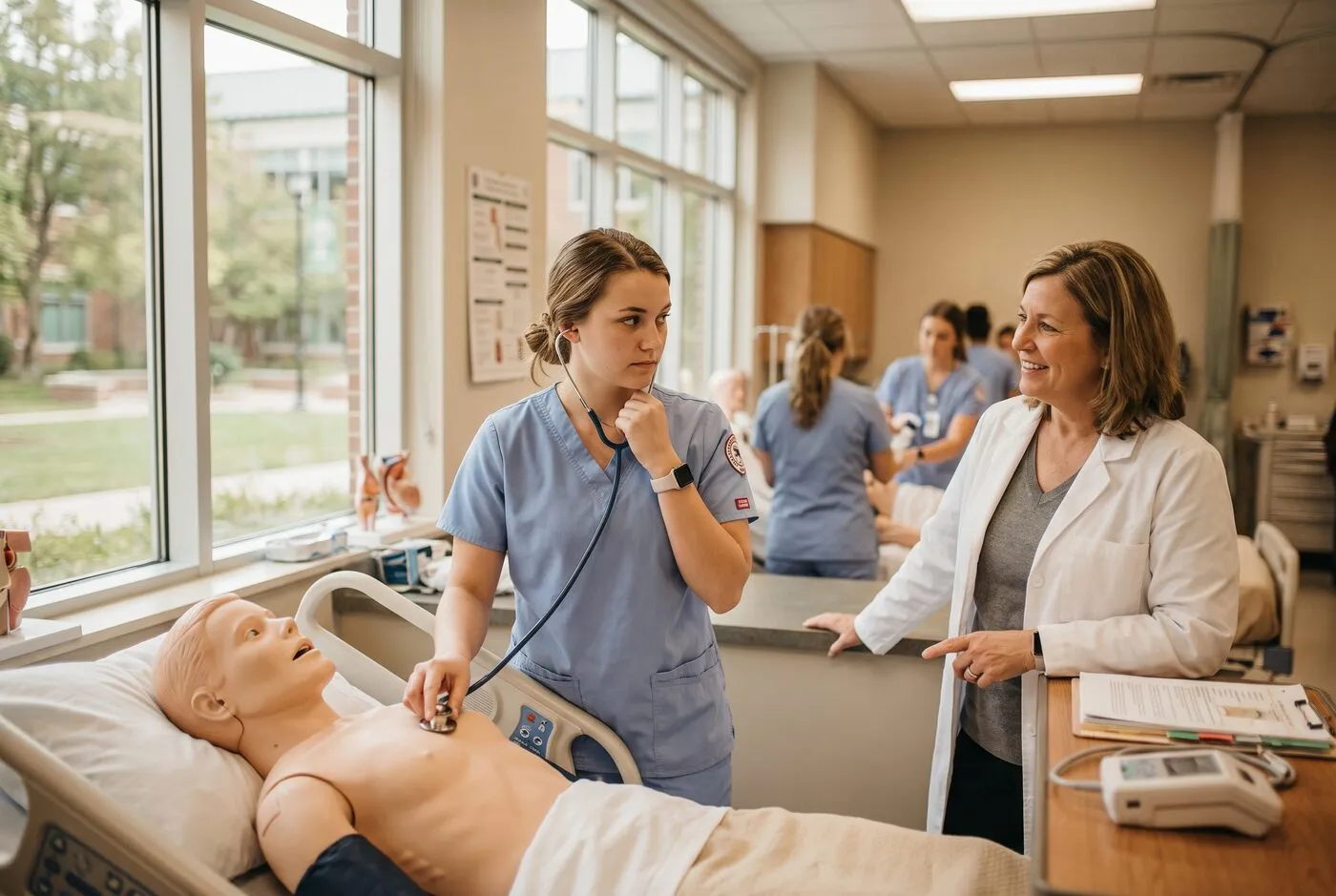
How long does it take to become a nurse? The short answer: you can sit for the NCLEX-PN and become a licensed practical nurse in about 12 months, or become a registered nurse in as little as 2 years through an associate degree program. The longer answer is that every one of those timelines hides real friction, prerequisites, waitlists, and licensing steps that most articles skip over, and the route you pick changes both your paycheck and your ceiling for years afterward.
This page walks through every legitimate path to becoming a nurse, what each one actually costs in time, and where the math changes depending on whether you already hold a degree, whether you want the fastest license possible, or whether you are building toward nurse practitioner money down the road.
How long it takes to become a nurse, by route
Here is the punchline: you can become a nurse and hold an active RN license in 2 years, but the 4-year route is the one that pays off in hireability. Both paths end at the same exam and the same license, the difference is what happens when you start applying for jobs.
The practical nursing route is the fastest way into a paycheck. An LPN/LVN certificate takes about 12 months, ends with the NCLEX-PN instead of the NCLEX-RN, and leads to a median salary of $64,400. It is real nursing work, mostly in long-term care, clinics, and home health, but it is a different license and a lower ceiling than RN.
The associate degree (ADN) is the fastest way to become a nurse with the full RN license. Two years at a community college, then the NCLEX-RN, and you are a registered nurse earning a median of $97,550. The best ADN programs run through public community colleges and cost a fraction of a university BSN.
The bachelor's degree (BSN) takes 4 years and ends at the identical NCLEX-RN and the identical RN license as the ADN. Same exam, same scope of practice, same $97,550 median. What changes is who wants to hire you: many hospitals, especially Magnet-designated ones, now prefer or require a BSN on day one. The best BSN programs are worth comparing against the 2-year route before you commit either way, and the tradeoffs are broken down further in ADN vs BSN.
If you already hold a bachelor's degree in something unrelated, the accelerated BSN (ABSN) compresses that same 4-year curriculum into 12 to 18 intense months.
The fastest way to become a nurse with an RN license
If the question is really "what is the fastest way to become a nurse with a full RN license," there are only two honest answers: the 2-year ADN at a community college, or the 12-to-18-month accelerated BSN if you already hold a bachelor's degree in anything else. Every other way to become a nurse is slower by definition.
Here is what "fastest" costs you. An ADN gets you licensed and earning the $97,550 RN median in roughly half the time of a BSN, but a growing number of hospitals filter BSN-only at the resume stage, and many ADN nurses end up doing an RN-to-BSN completion program anyway, typically 12 to 24 months, usually online, while already working full time as an RN.
Run the math both ways. Straight BSN: 4 years, done, RN license, no bridge program later. ADN plus bridge: 2 years to license and a paycheck, then 1 to 2 more years of RN-to-BSN completion, for a total of 3 to 4 years and two tuition bills instead of one. The ADN route wins if you need income sooner and can tolerate finishing the BSN later. The straight BSN route wins if you can afford 4 years upfront and want to walk into hospital hiring pools without a caveat next to your degree. Neither path is wrong, but pretending the ADN is "free" time savings ignores that most of those nurses go back to school anyway. Either way, you become a nurse and hold the same RN license at the end.
Already have a bachelor's? The accelerated path to become a nurse
If you already have a bachelor's degree in psychology, biology, business, or anything else, the accelerated BSN is the fastest way for you to become a nurse without starting your education over. ABSN programs compress the standard 4-year nursing curriculum into 12 to 18 months by skipping the general education courses you already completed and running science and clinical coursework back to back, often year-round with no summer break.
Who survives an ABSN: people who can treat it like a full-time job or more, who do not need to work for income during the program, and who already have the science prerequisites (anatomy, physiology, microbiology) done or nearly done before day one. Missing prerequisites do not shrink in an accelerated program, they get bolted onto the front of it.
Who should take the 2-year ADN instead: anyone who needs to keep working while studying, anyone still short two or three science prerequisites, and anyone who is not sure nursing is the right fit and wants a lower-cost, lower-intensity way to test that before committing to a compressed year and a half. The accelerated BSN programs worth applying to are selective specifically because the pace weeds out anyone who is not fully committed to becoming a nurse on this schedule.
Beyond the RN: how long to NP, CRNA, and the big salaries
Becoming a nurse is the first rung, not the last one. The RN license, earned in 2 to 4 years, gets you to a $97,550 median salary. The next rung up is the nurse practitioner, and it is a much longer climb than most people expect going in.
To become an NP, you first need a BSN and RN experience, commonly 1 to 2 years working as a registered nurse, before most graduate programs will even admit you. Then comes a 2-to-4-year MSN or DNP program. Add it up from zero and you are looking at roughly 6 to 10 years total to reach NP status and the $132,300 median salary that comes with it, a meaningful jump over the RN median. The RN salary page breaks down what that $97,550 looks like by state and setting if you want the full picture before deciding whether to stop at RN or keep climbing.
CRNA is a further climb still, requiring ICU experience on top of the RN license before anesthesia school, easily adding several more years beyond the NP timeline for anyone chasing the highest advanced-practice pay.
So here is the practical next step depending on where you are standing right now. If you need income fast and no bachelor's degree yet, start with the ADN and the 2-year path to becoming a nurse. If you already hold a bachelor's degree in anything, look at the ABSN and its 12-to-18-month runway. If you are already an LPN, the LPN-to-RN programs are your fastest bridge to the RN license and the $97,550 median it pays. And if the goal was never just to become a nurse but to become an NP, the RN license is not the finish line, it is the entry ticket to the next 4 to 6 years of school.